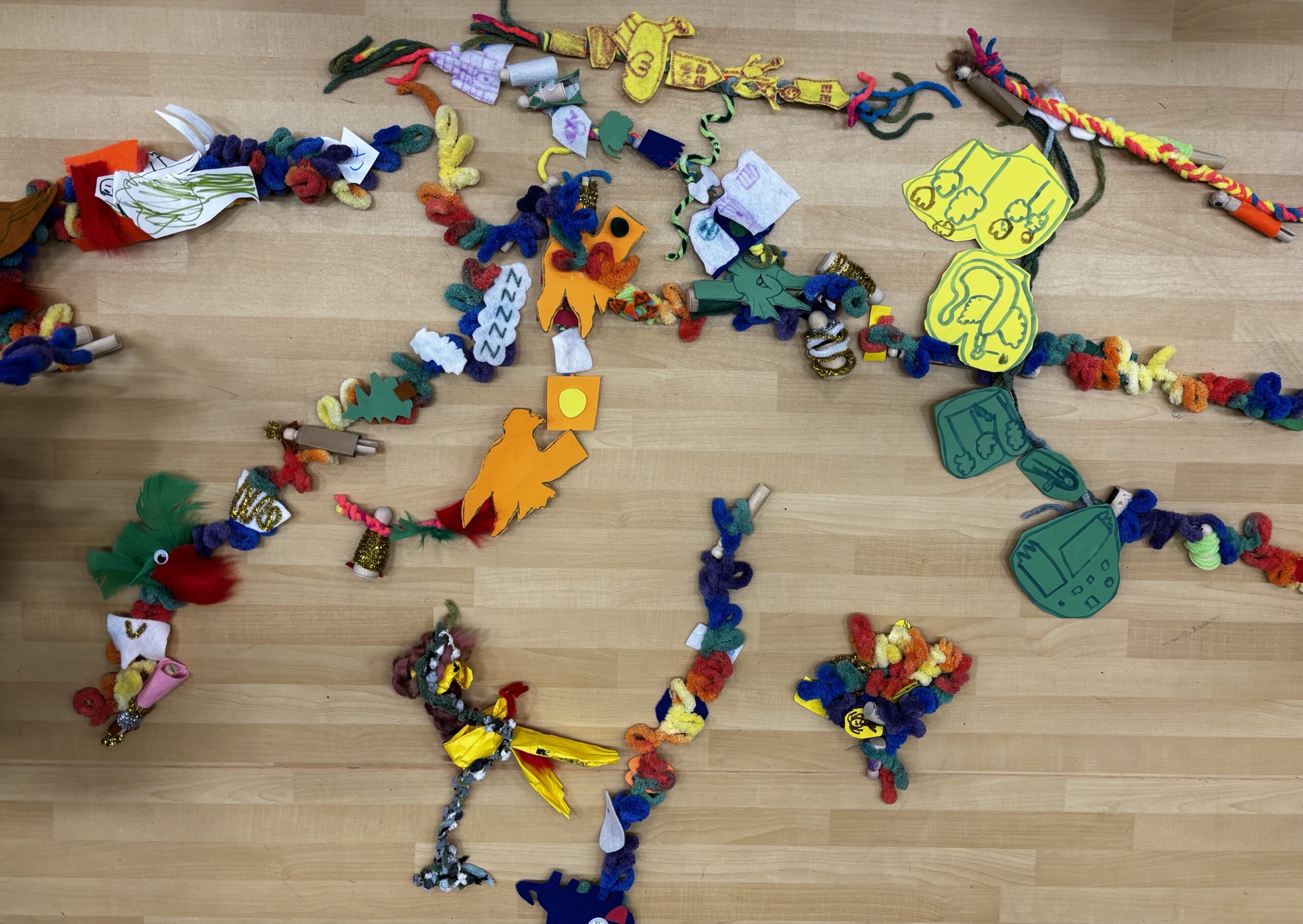
For the past two weeks we explored using story vines for re-telling in the classroom. Story vines are created based on a story, using a weaved piece of yarn or rope with visual cues to remind the re-teller of important pieces of the story. Robin Bright identified using story vines as a key strategy to help teach fluency (Sometimes Reading is Hard, 2021).
“Story vines enhance reading, writing, listening, speaking, representing and viewing. These are all of the language skills that teachers strive to develop in children” (Stephanie Gorkarn, Weebly).
Classroom Application
We began this process the week prior to visiting the school and we created our own story vines based on a book of our choice. I did mine on The Paper Bag Princess, so I could use it as an example while working with students, as well as to honour Robert Munsch Week.
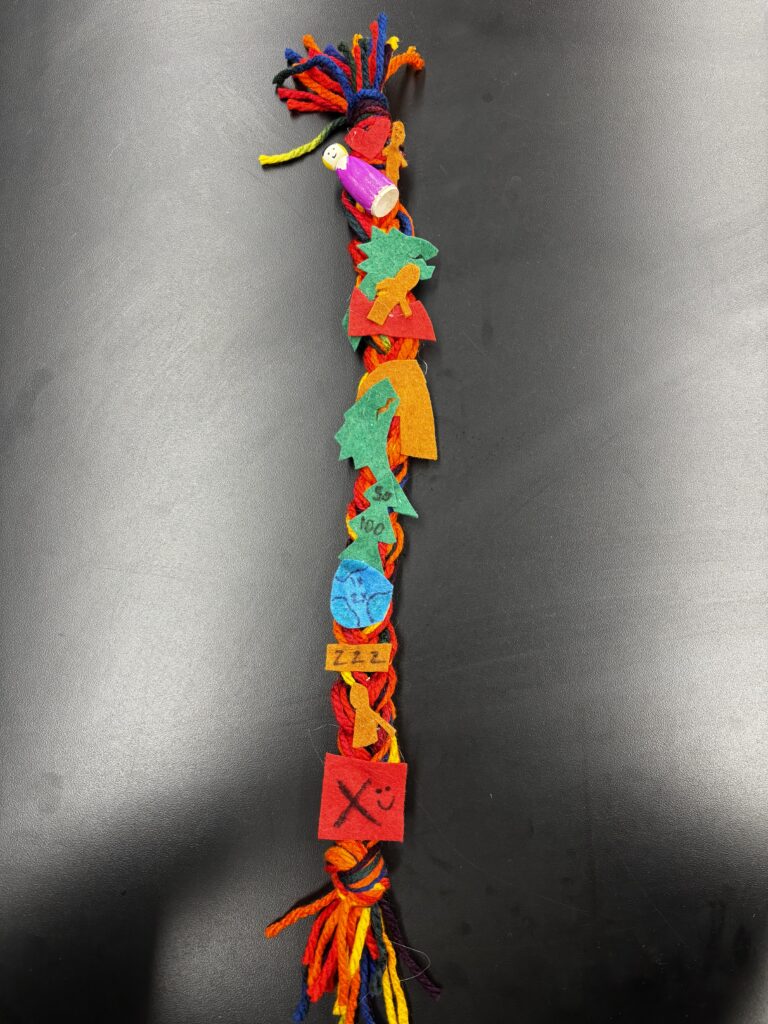
Then we got the opportunity to work with a grade 2/3 class at a local book store, where students created their own story vines! We began by reading The Paper Bag Princess in small groups, then got to work planning and creating their own story vines.
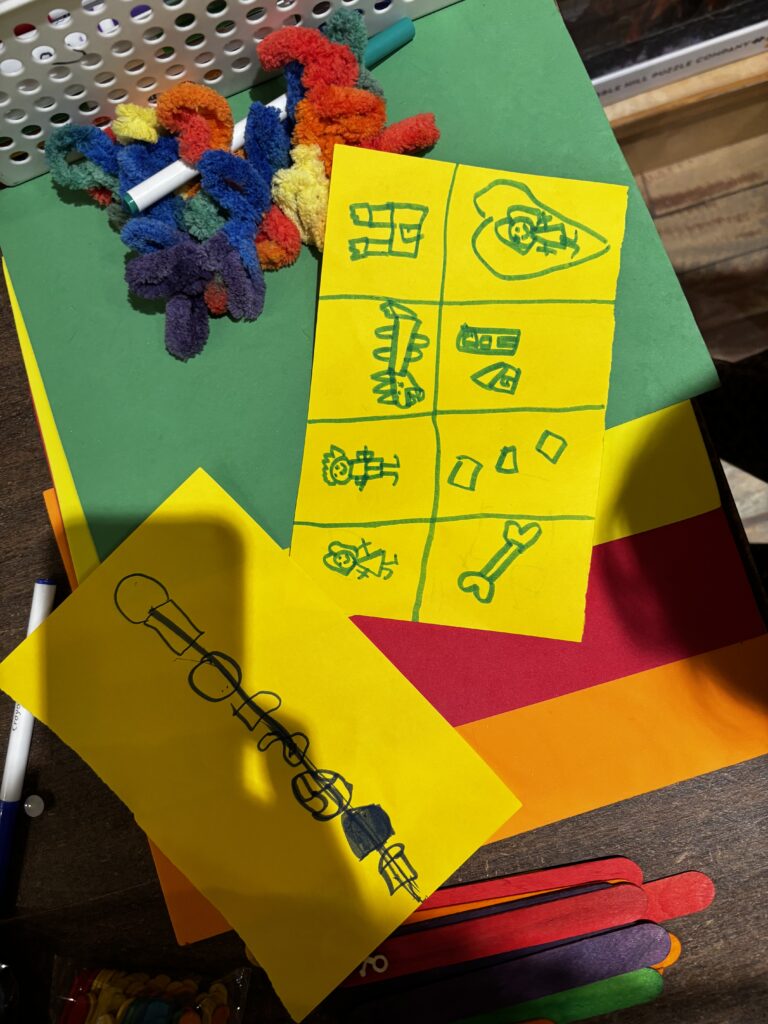
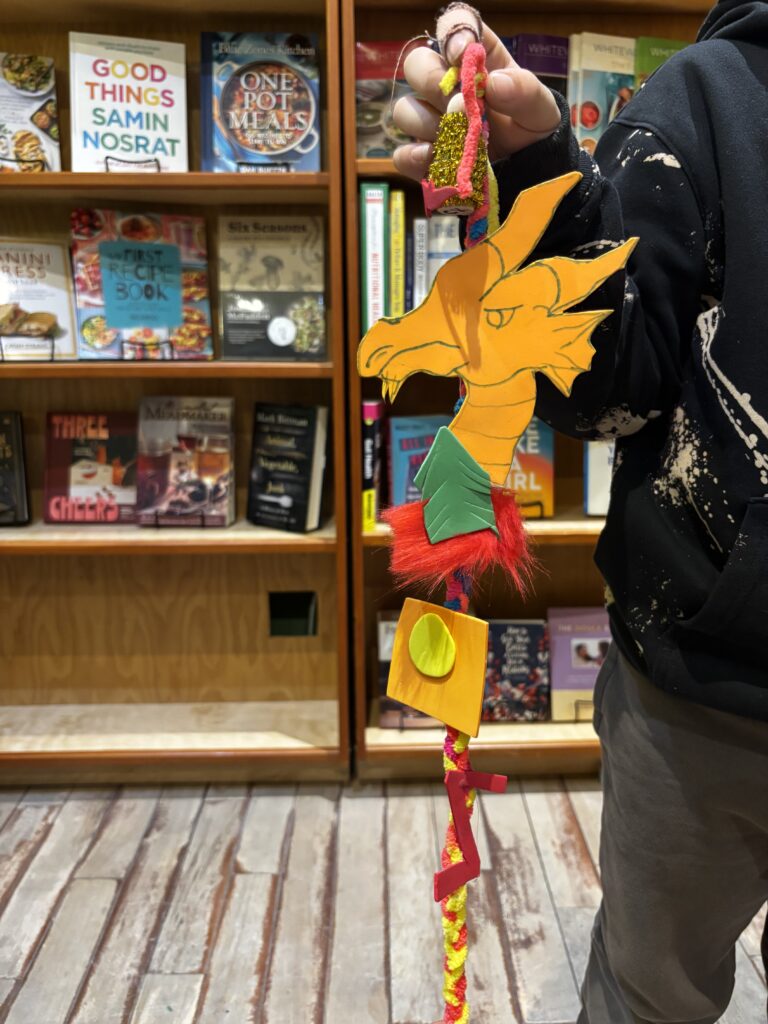
It was an amazing experience to see students connect to the story, and decide which are the most important elements to include on their story vine. Their creativity in designing their story vines was wonderful! Students used the provided materials to create different elements of importance to represent the story. In the photo above, one student used a felt tree with red fur behind it to represent the dragon during down forests while Princess Elizabeth was making him tired.
The next day we met with the same grade 2/3 class and met with two kindergarten classes where we split into small groups. The grade 2/3 students re-told The Paper Bag Princess story to the kindergarten students using their story vines. Watching students use their story vines to re-tell the story was amazing! The students did a great job using their story vines as cues. It was apparent that the students understood and comprehended the story. Miss Penney and I asked the student who was re-telling the story questions and they had very in-depth answers.
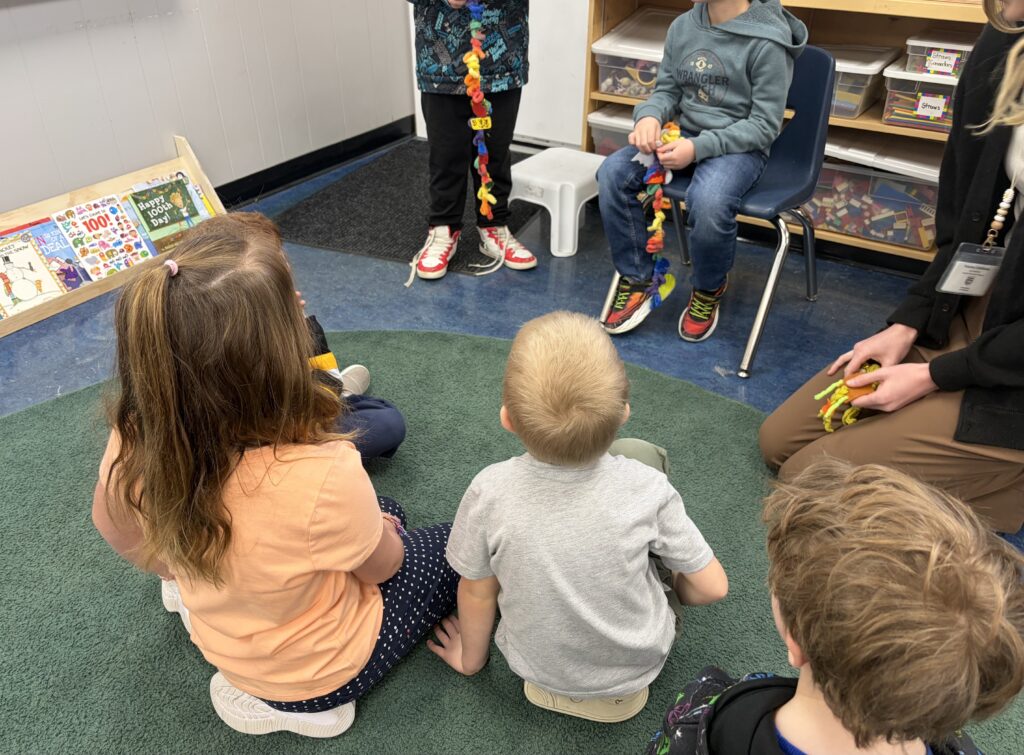
I cannot wait to do this activity again! All the students were engaged, had high comprehension of the story, and worked on oral storytelling! It could also be cross-curricular, and scaled up or down for different grades.
Curricular Connections
Big Idea: Language and story can be a source of creativity and joy.
Curricular Competencies: Explore oral storytelling processes.
Content: Elements of a story & oral language strategies.
Big Idea: Language and story can be a source of creativity and joy.
Curricular Competencies: Use oral storytelling processes.
Content: Elements of a story & oral language strategies.