
As explained in UVIC Teacher competency number 12, reflective (after the fact) and reflexive (in the moment) practices help to “develop an understanding of how learners learn in order to cultivate effective learning environments”. There are two thinking models below that help in the reflective process.
Gibb’s Model
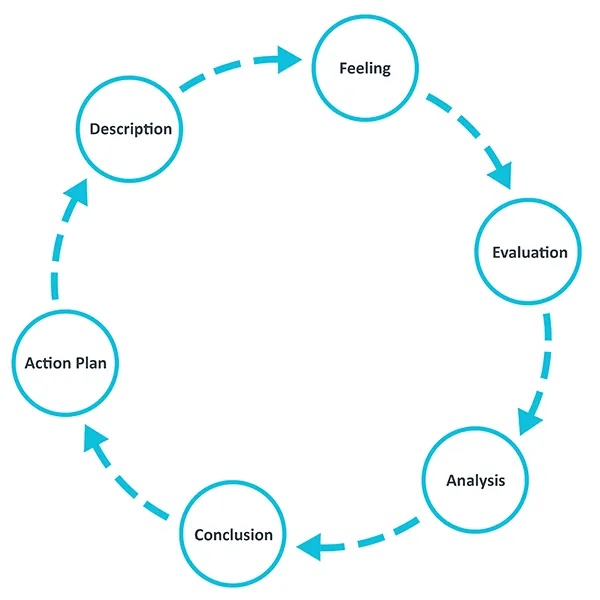
The Gibb’s Reflective Model has 6 stages: experience, feelings, evaluation, analysis, conclusion, and action plan.
Driscoll Model
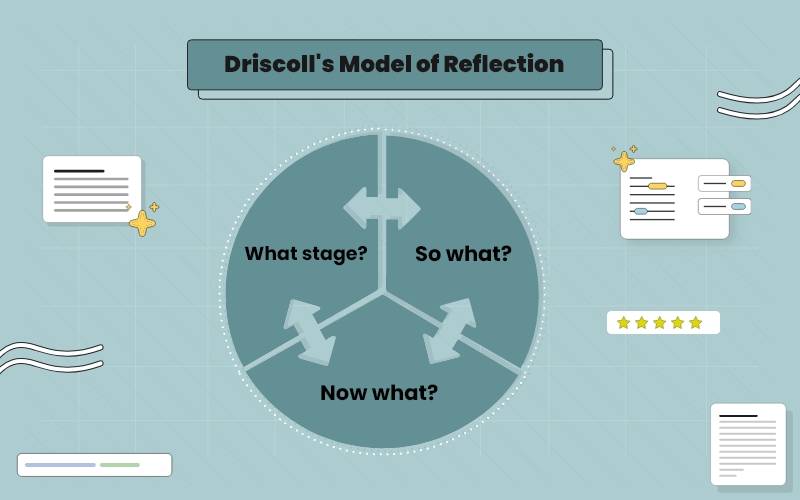
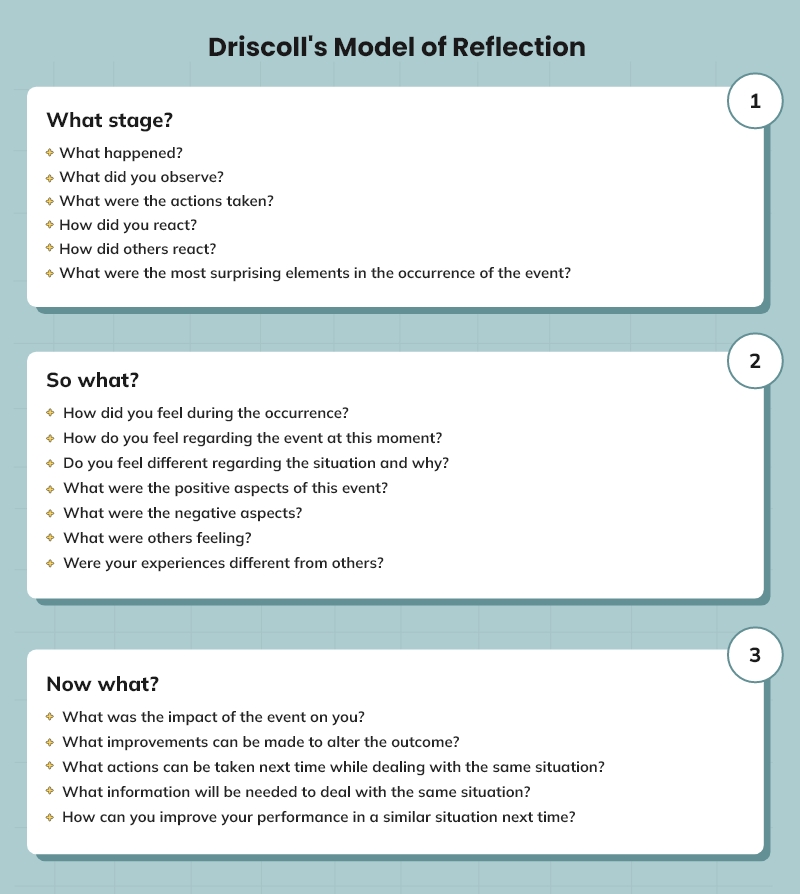
The Driscoll model follows three simple steps: what stage, so what, now what.
Similarities
Both of these reflective models are cyclical in nature, that focus on learning from experiences. Both of these models help to deepen self-awareness in order to improve further teaching. It helps to move away from simply ‘what happened’, and towards deeper understanding of what happened and how it can be improved.
Differences
The Gibb’s model is more expanded than the Driscoll model, including a section for feelings, and breaks down the reflection further by including an area for evaluation and conclusion; whereas the Driscoll model has three simple stages ‘what, so what, now what’. This model has less stages to remember when reflecting, but provides less prompts that may limit thinking (however, further prompting questions for this model are provided here). The Driscoll model provides an opportunity for more flexible reflection, whereas the Gibb’s model is much more guided. Because of these differences, I would suggest using the Gibb’s model for people who have little experience using reflective models.
Personal Reflection – Driscoll Model
What Stage?
Recently I taught a lesson based on a book to a grade ½ class. At the end of the story we did a class brainstorm about the students ‘happy place’, how it makes them feel, and why it is special to them. After the brainstorm the students were intended to write a short individual refection piece answering those three question. I did the group brainstorm with the intention of getting students ideas flowing, and to help give a starting point to any student that is stuck getting started. In the brainstorming phase, one student shared that their happy place is in Mexico, because of the time spent there with their family, and it makes them feel happy. About five other ideas were shared and then students went to their table spot to begin their writing. As I was circulating the class I discovered that the majority of students happy place, including those who shared their own idea, was now in Mexico with their family.
So What?
Immediately when I saw all students writing their happy place was in Mexico I felt discouraged. I continued to circulate and ask students if they have been to Mexico before, and some said yes and some said no. I then began to feel worse because I unintentionally started a conversation regarding privilege. I believe some of the students that wrote Mexico did so to fit in with their peers, because they felt different and excluded. However, a positive aspect of this event is that although not all students ideas were original they still produced great pieces of writing with a hand-drawn picture that matched their sentences. In conversation with the classroom teacher and my own peers I have realized that this is a common occurrence. In reflection of this experience now, I still have regrets of how I conducted this lesson, but I know now it was a learning experience and one that I can improve my own practices because of.
Now What?
Moving forward, when doing a lesson similar to this I will avoid doing a whole class brainstorm. In the future I would opt for a think, pair, share, or a quick partner brainstorm. I would then give students an opportunity to begin their writing. If I saw some students struggling to get started I would have a one on one conversation or pull a small group to ask them further prompting questions to help them get started on their writing. In these conversations I would also tie the conversation back to the book to prompt a more natural, holistic connection. Although this was a difficult learning experience for me, I have learned from it and look forward to improving moving forward.
judi61
February 11, 2026 — 12:25 pm
Josie,
Good for you to realize that taking the ‘pulse’ of the class, reflecting on it helped you to revise your future delivery of a similar lesson. What competency does this link with?
josiemackie
February 11, 2026 — 12:29 pm
Hi Judi,
At the very top of the post below the heading it says competency number 12 – reflective and reflective practices are important to help learners learn and create positive learning environments.
judi61
February 11, 2026 — 12:40 pm
And, so there it is! I appreciate your speedy response! For some reason I was looking for it at the end! Thank you, Josie!